The National World II Museum - five interconnected pavilions
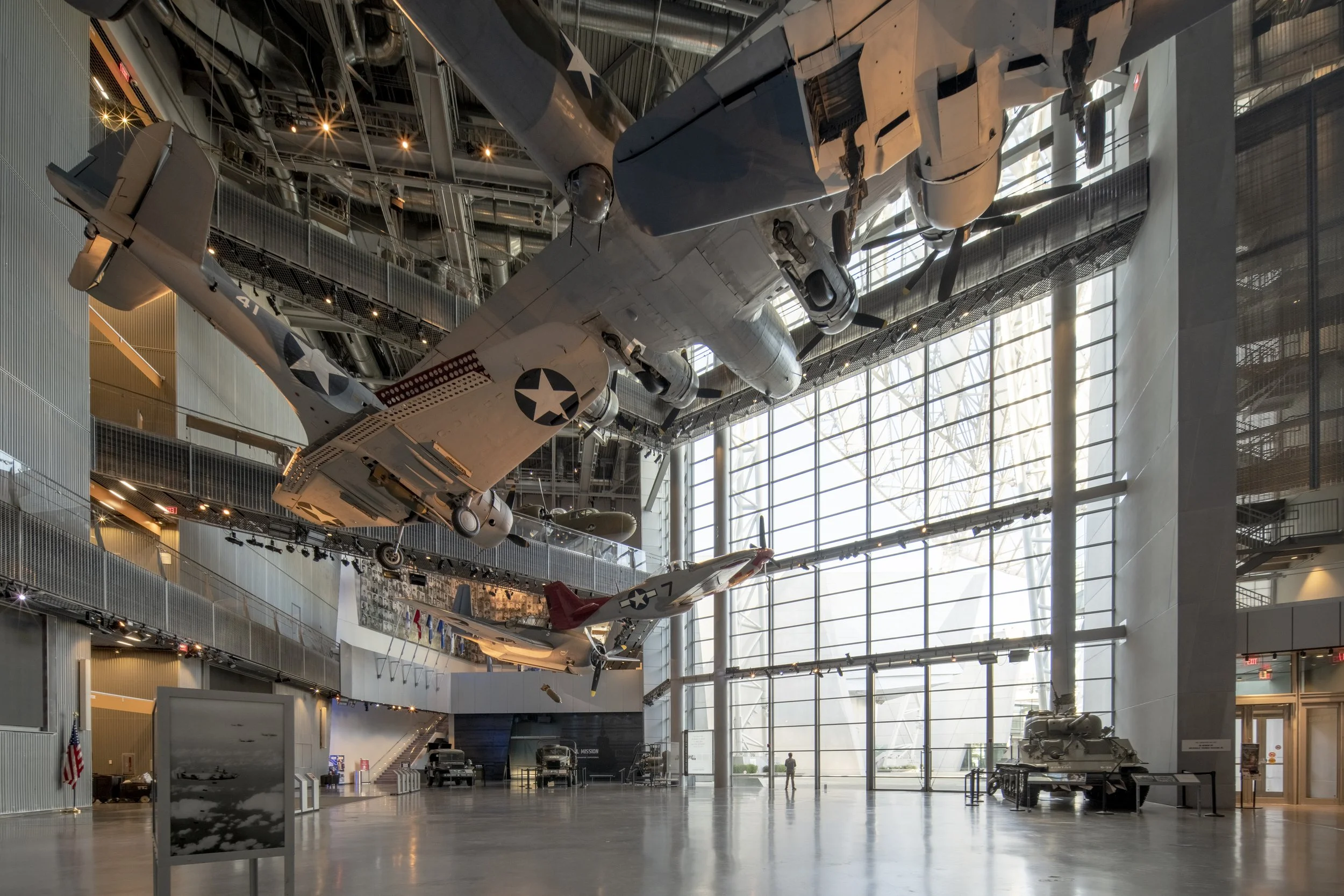
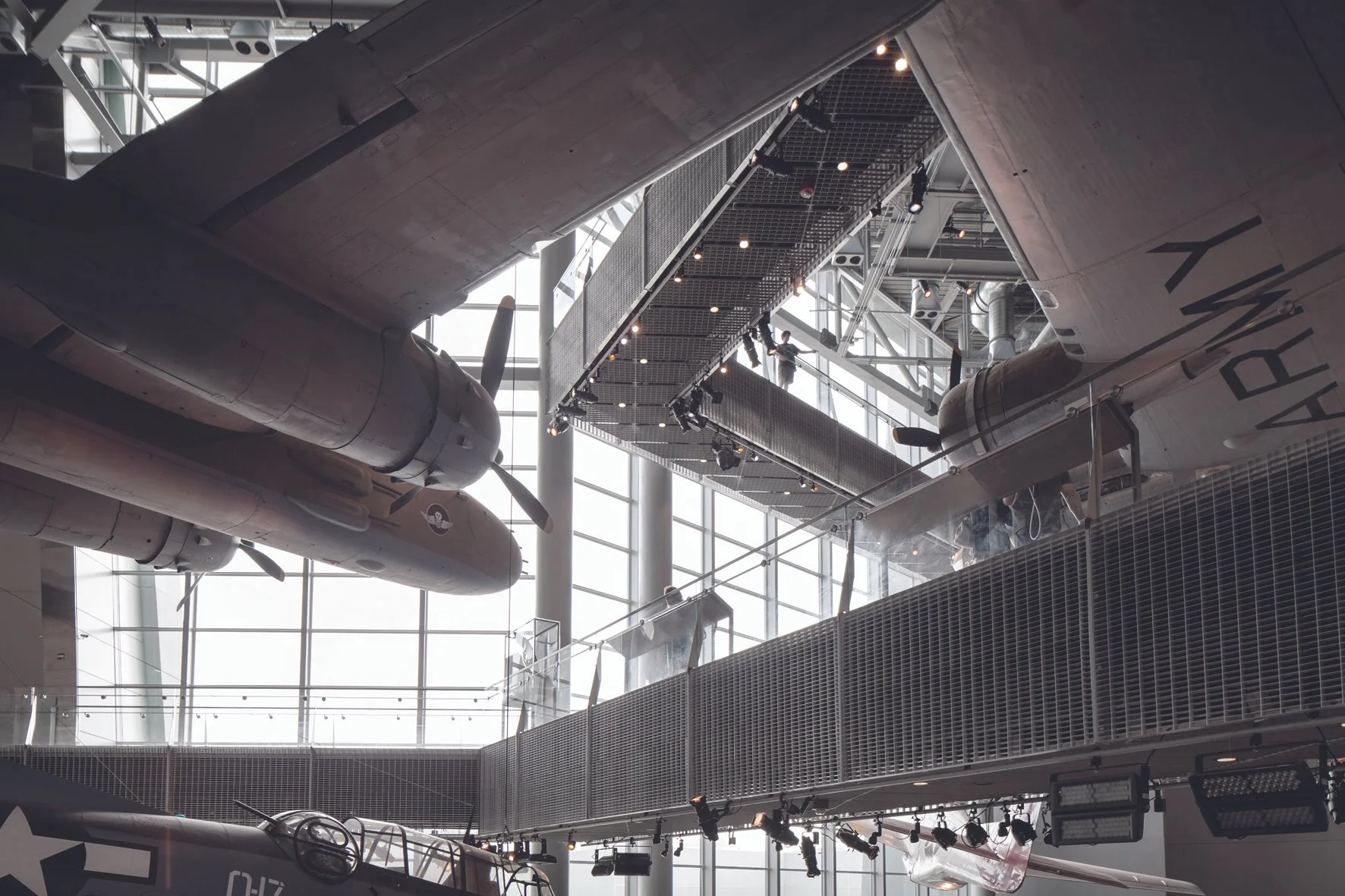
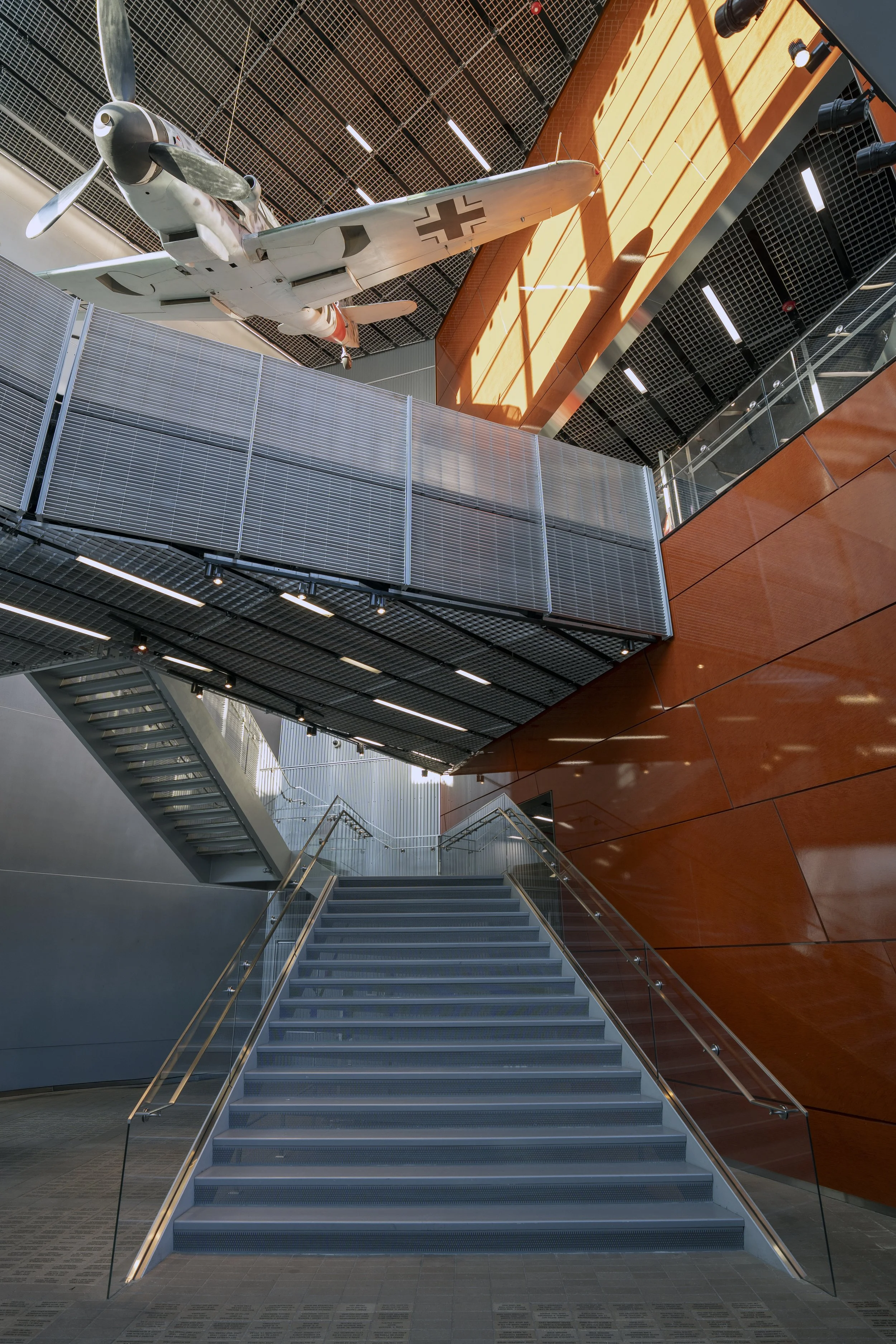
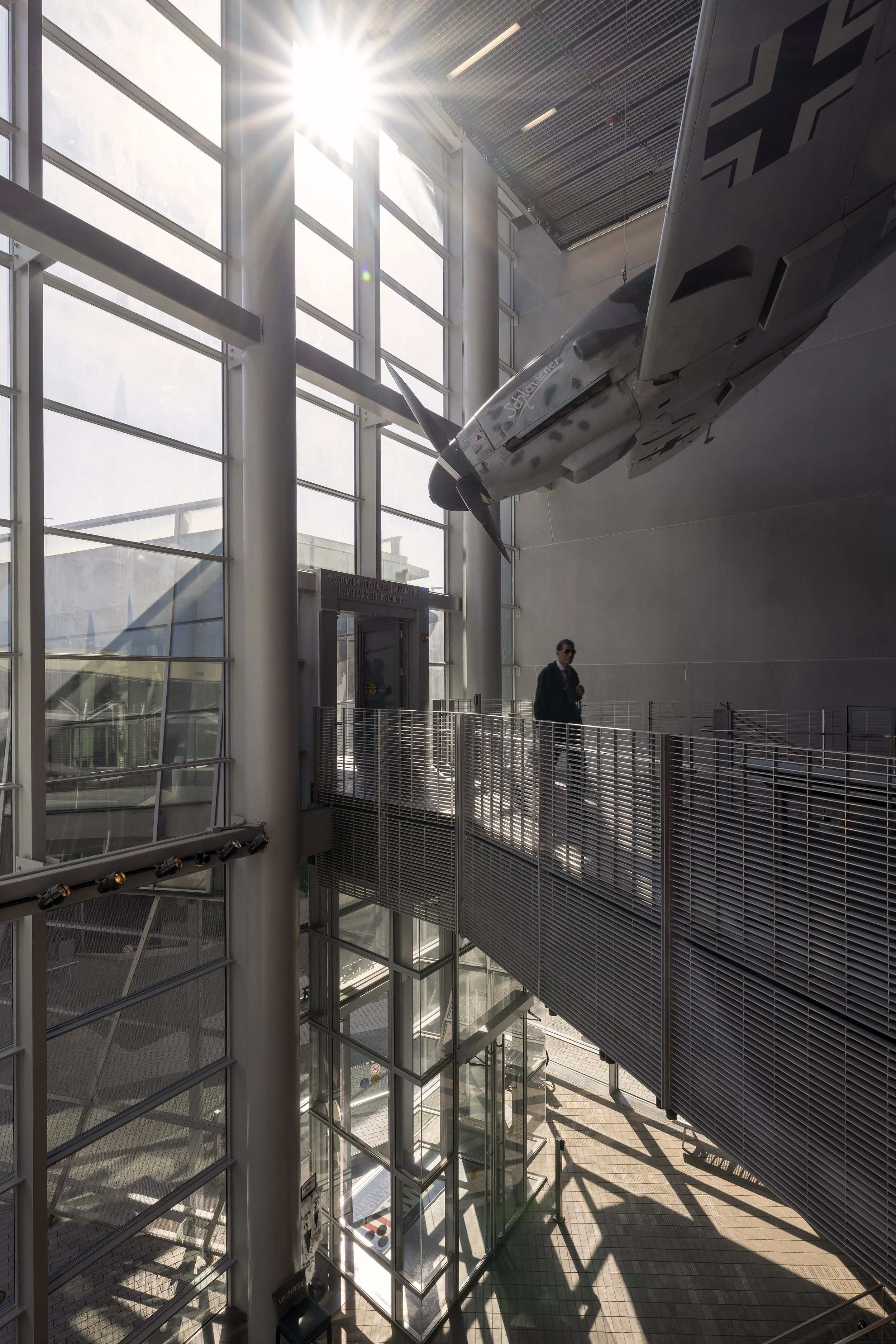
The Museum experience unfolds as a carefully sequenced journey through five interconnected pavilions, guiding visitors through the theaters of war from entry to victory. Beginning in the U.S. Pavilion, which chronicles the origins of the conflict, the path continues through the Campaign Galleries, the Pacific and European Theaters, and the Liberation and Military Services Pavilion, culminating in the Victory Pavilion—a space of reflection and celebration.
The design anticipates varied visitor experiences, offering both comprehensive and “express” routes. Each pavilion is conceived as a distinct narrative chapter, yet all are united through material language and spatial rhythm, allowing architecture and exhibition to move in concert..
Project Size
350,000sf
Location
New Orleans, LA
Lead Design
W/ VoorsangerMathes Llc
Designing Reflection: The Spiritual Heart of the Museum
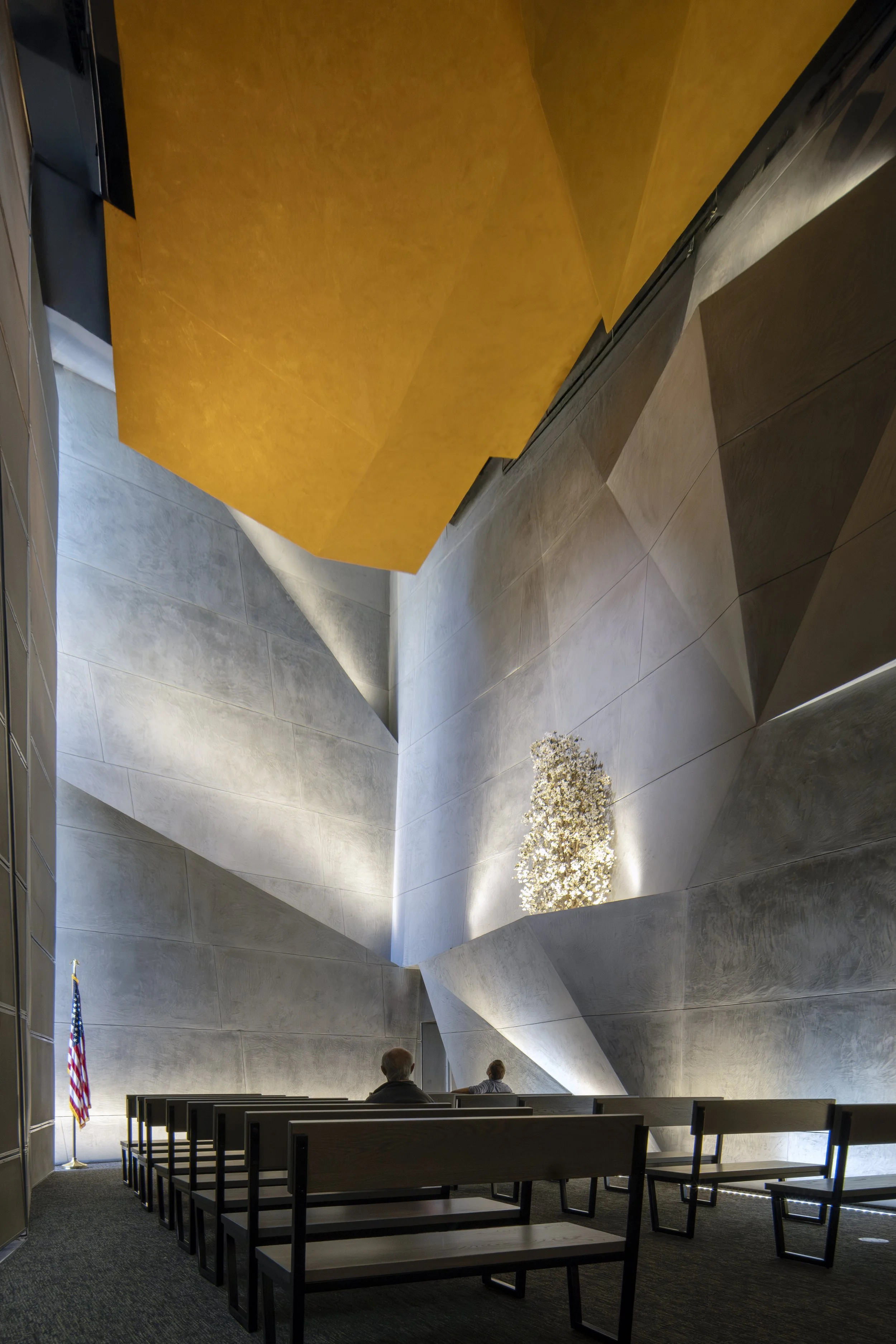
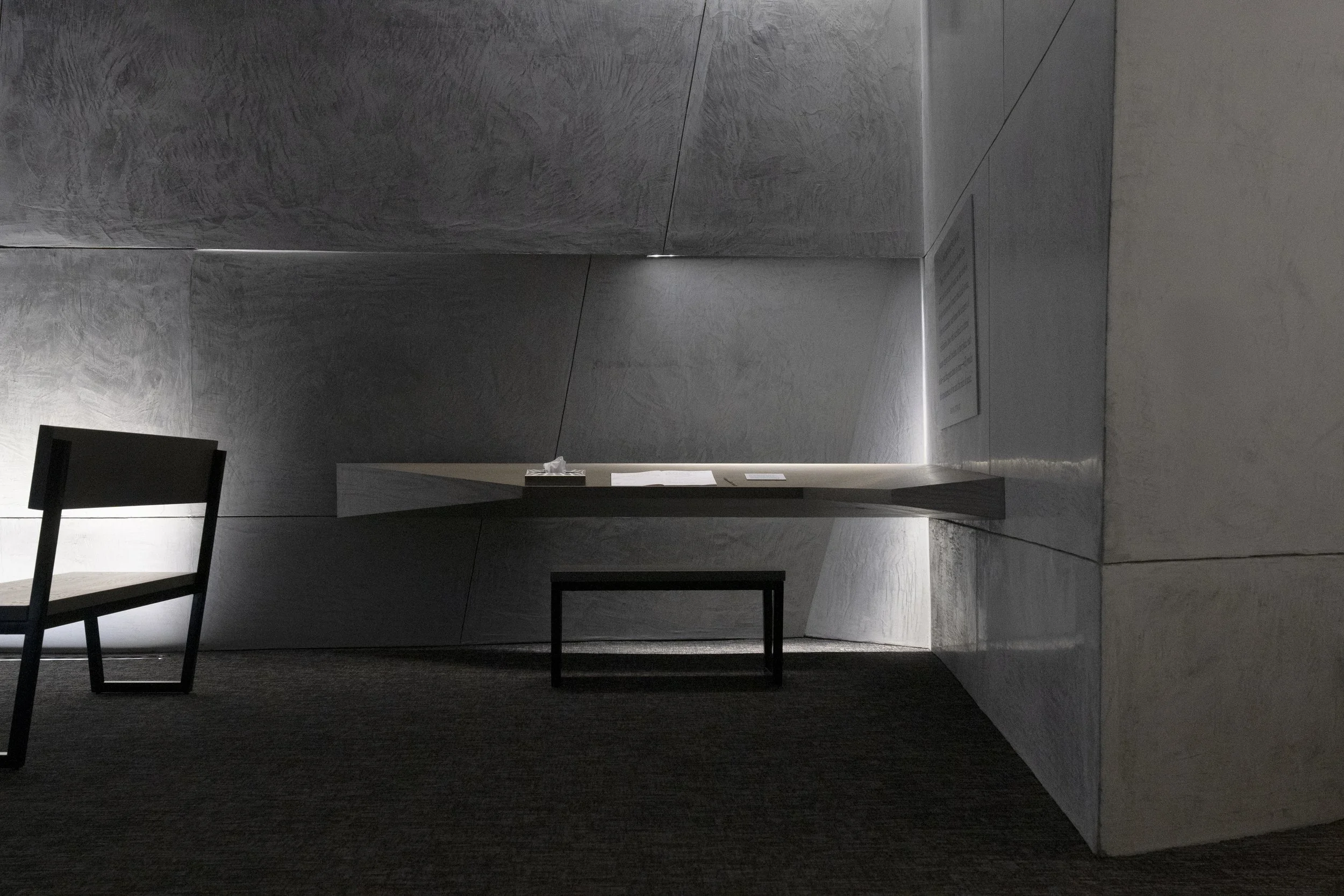
Amid the monumental scale of the Museum’s campus—its pavilions of history, technology, and strategy—the Chapel stands apart as a place of quiet reflection and human connection. Conceived as an intimate counterpoint to the Museum’s vast exhibition halls, it honors the spiritual dimension of wartime experience: courage, loss, and resilience.
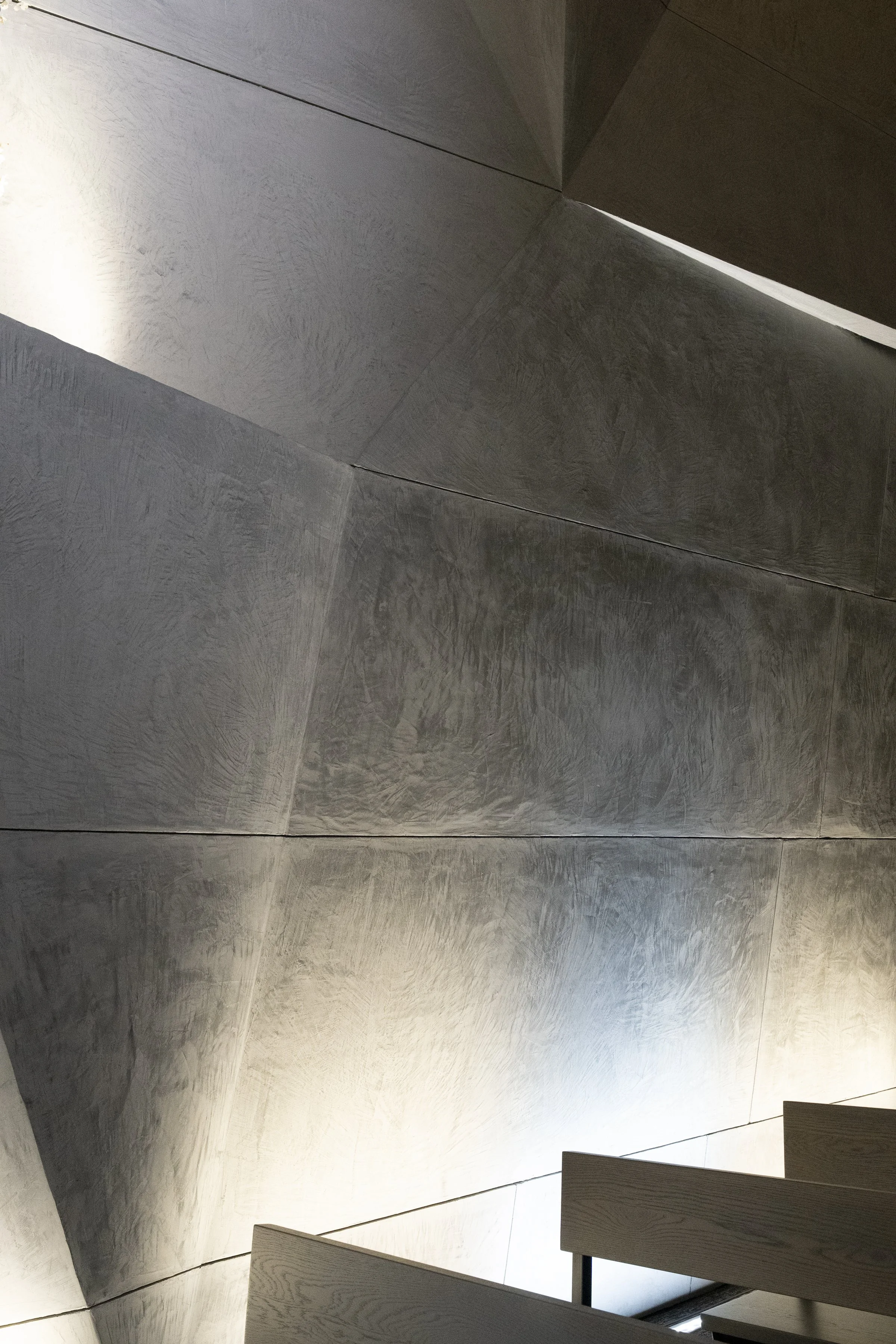
The design draws inspiration from wartime chapels and field structures that offered soldiers brief sanctuaries amid chaos. Modest in scale yet profound in purpose, the architecture embraces simplicity, restraint, and light. Composed of wood, concrete, and glass, its rectilinear volume invites contemplation rather than spectacle.
Filtered daylight enters through vertical slits and a clerestory above the altar, creating a rhythmic choreography of light and shadow—an architectural metaphor for remembrance and hope. The Chapel’s interfaith inclusivity makes it a universal space of mourning and gratitude, open to visitors of every faith and background.
It also serves as a venue for ceremonies, dedications, and private reflection, bridging the Museum’s public mission with deeply personal acts of remembrance. Architecturally, it completes the campus as a space of pause amid progression, balancing the monumental and the intimate, the collective and the individual.
Hall of Democracy — Knowledge, Memory, and Civic Engagement
As the Museum expands its mission to share the story of the American experience in World War II with learners worldwide, the Hall of Democracy marks a defining milestone. More than a physical addition, it represents a new era of outreach and scholarship—extending the Museum’s influence beyond its walls through digital learning, research, and public programming.
Located within the Hall of Democracy, the Jenny Craig Institute serves as the intellectual heart of the campus—a national center for scholarship and dialogue. Bringing together historians, educators, and thought leaders, the Institute explores how World War II shaped democracy, citizenship, and global society.
Through research, publications, and public programs, it transforms the Museum from a place of remembrance into a dynamic platform for reflection and debate—where the past continually informs the present.
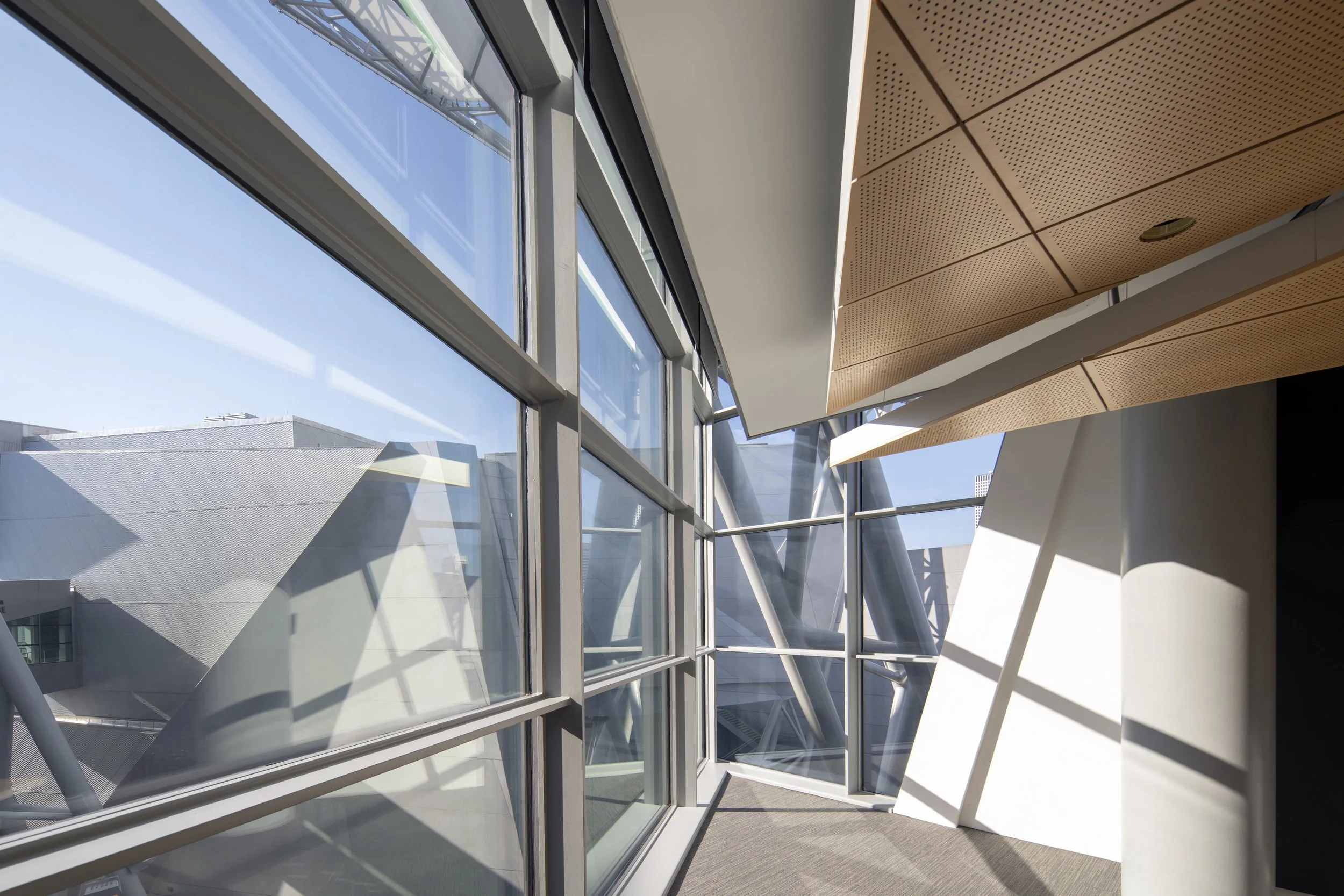
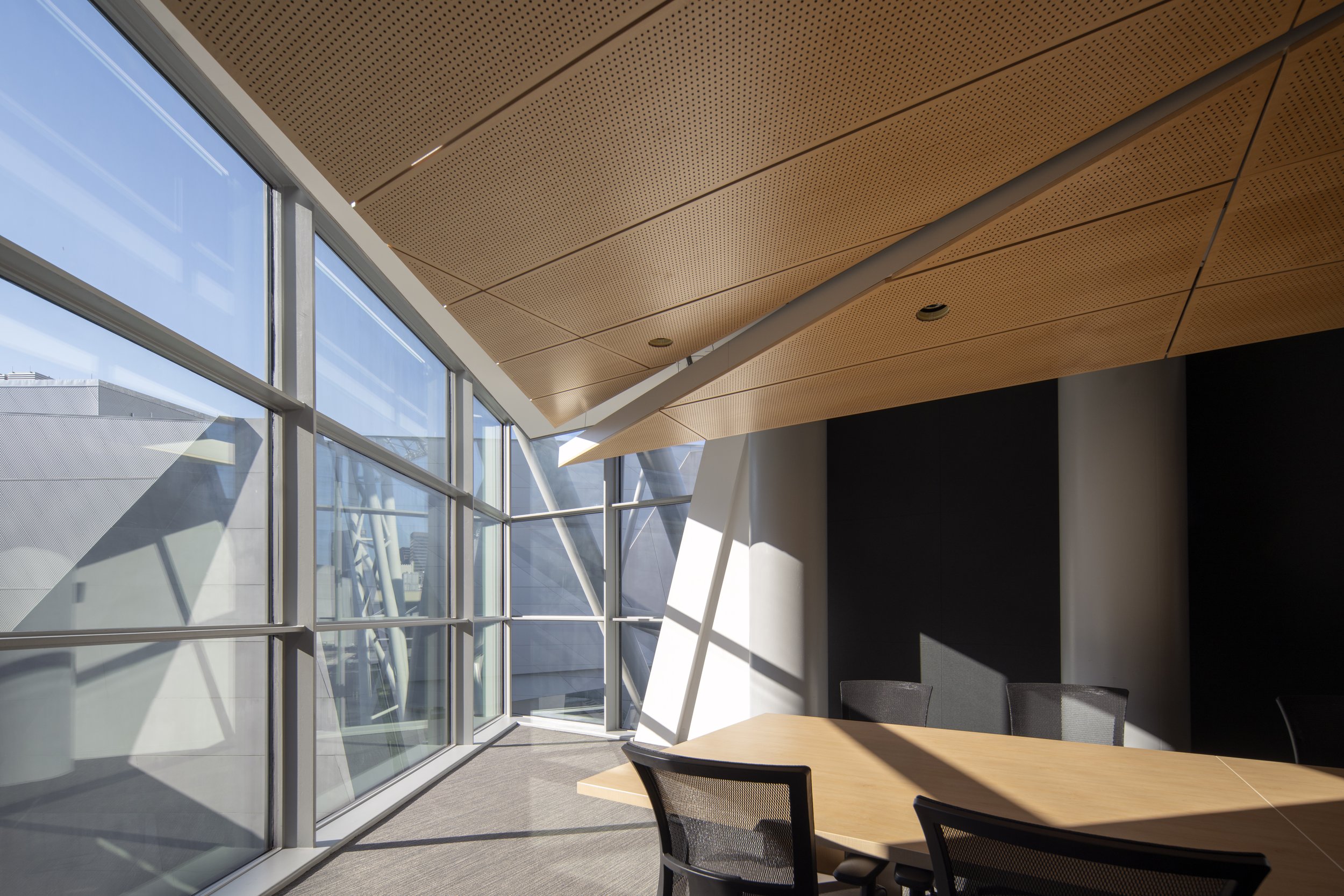
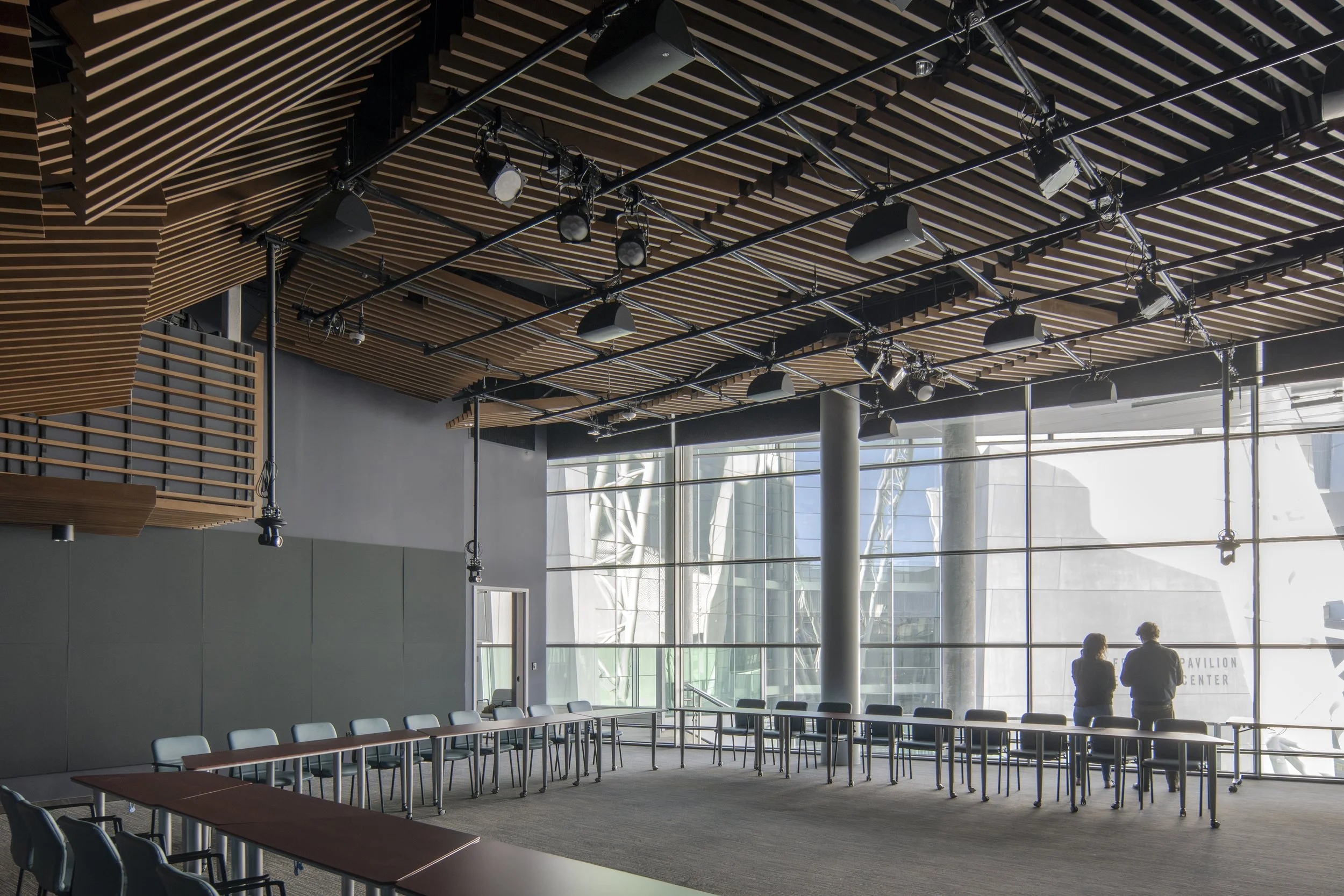
Architecturally, the Hall of Democracy extends the formal and material language of the campus, maintaining cohesion while introducing sculptural, light-filled spaces. At its core lies the Media Center, defined by a soaring ceiling inspired by defensive formations—a spatial metaphor for resilience and strategy. Clerestories and skylights infuse the interiors with shifting daylight, reinforcing the Museum’s themes of illumination and renewal.
Executive offices overlook the Parade Ground and surrounding pavilions, connecting leadership and scholars to the civic heart of the Museum. These spaces serve as inspiring settings for meetings, lectures, and events, bridging the Museum’s intellectual mission with its architectural presence.

Solomon Victory Theater — Immersive Storytelling
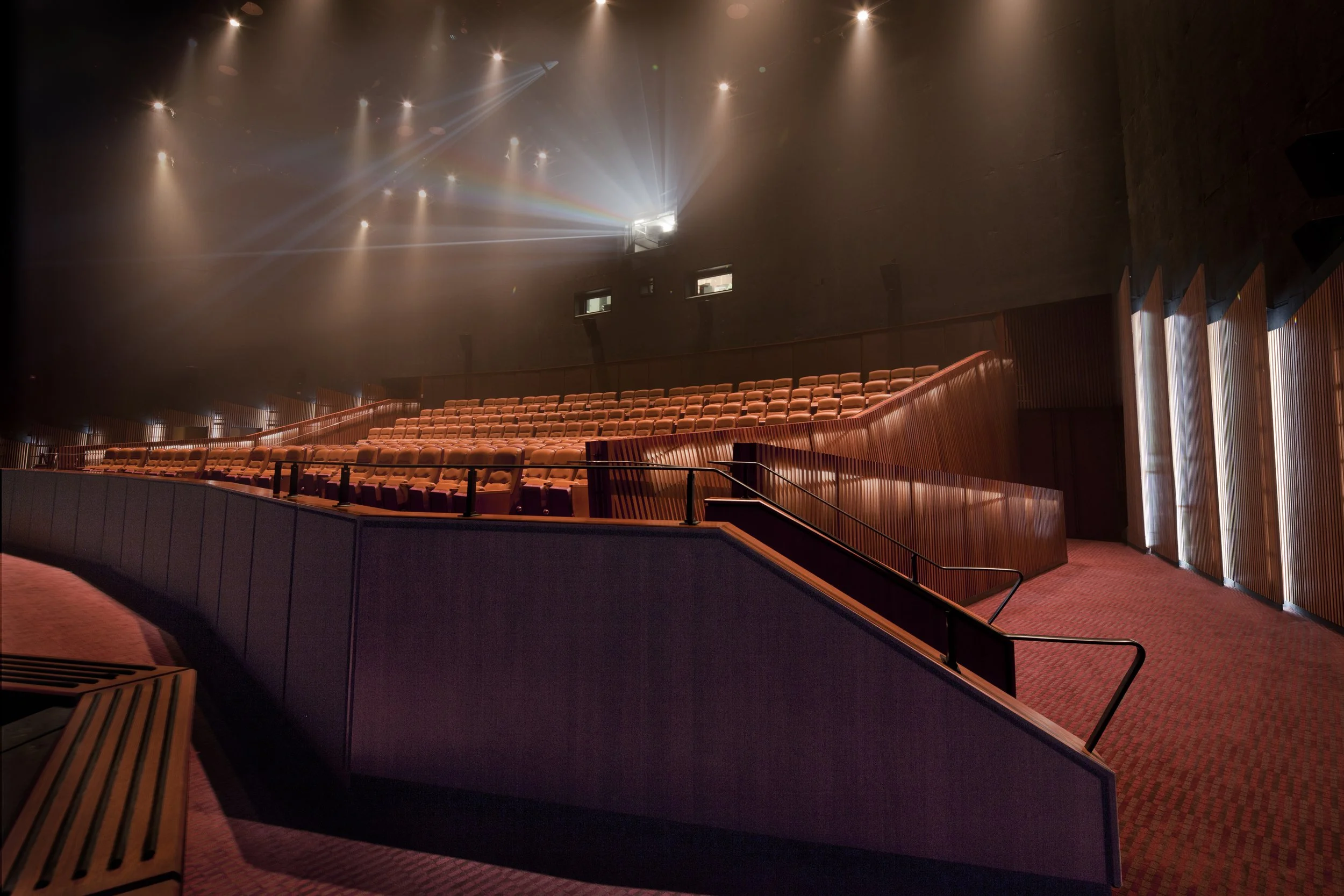
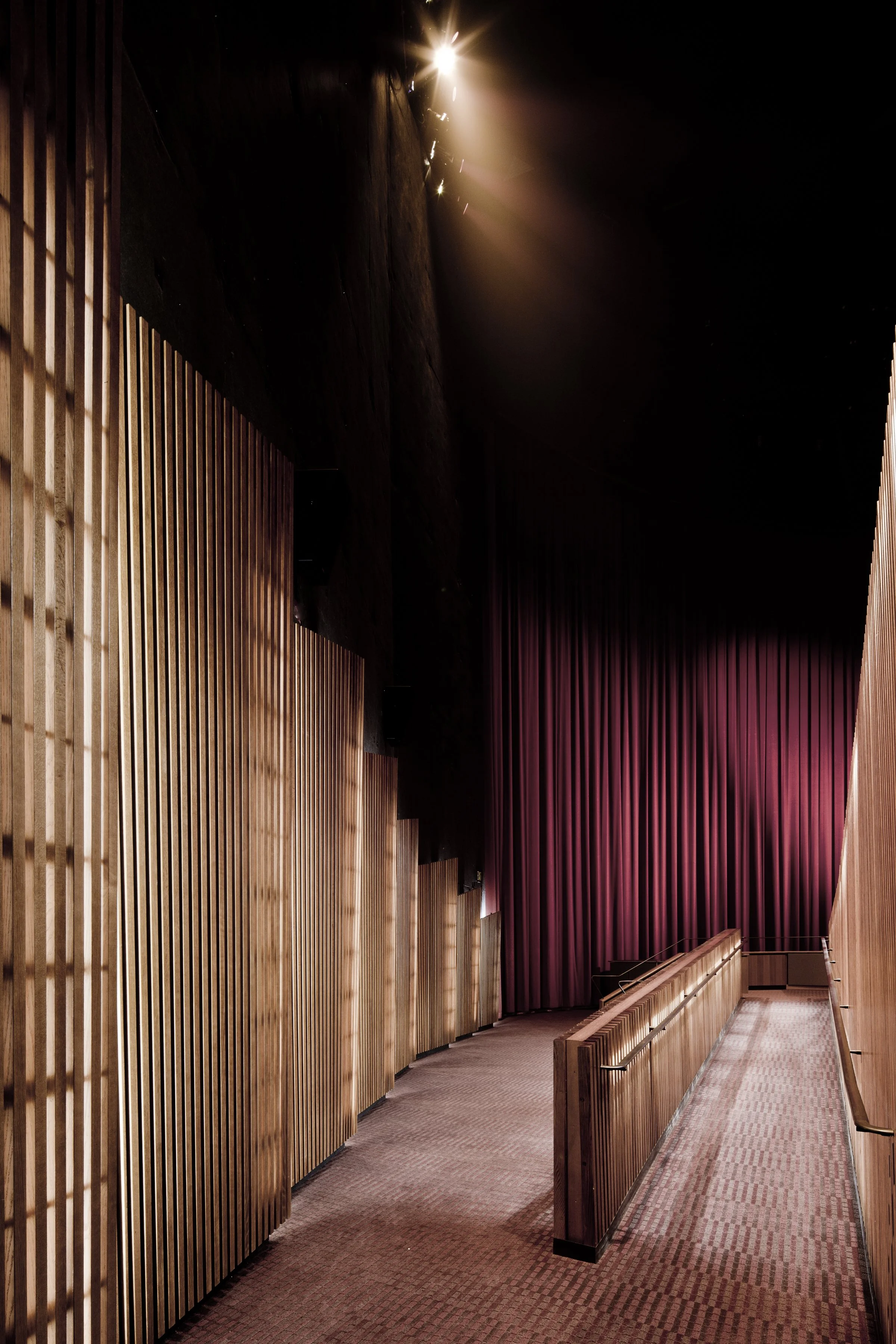
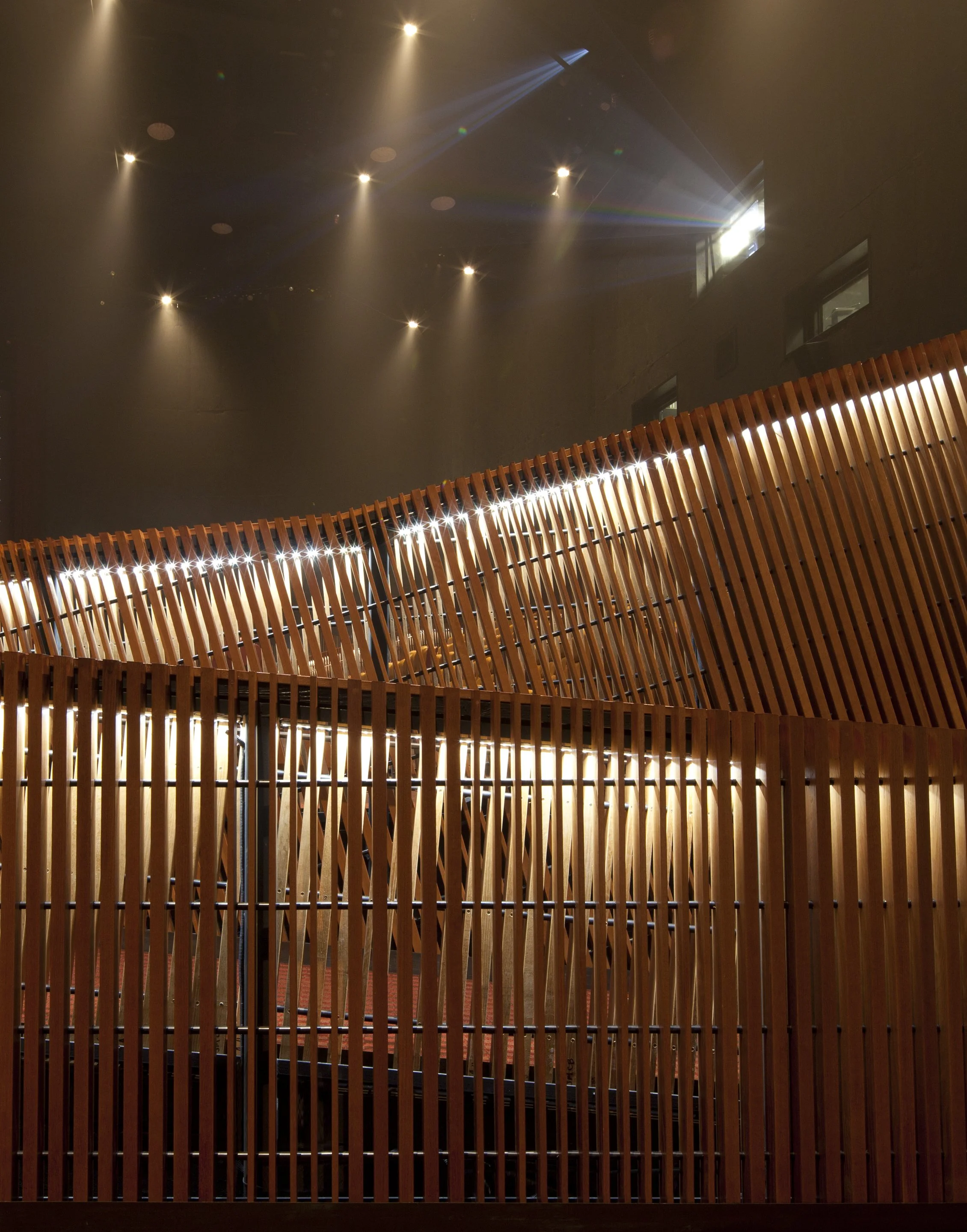
Opened in 2009, the Solomon Victory Theater stands as a cornerstone of the Museum’s mission—a fusion of architecture, technology, and narrative designed to immerse visitors in the lived experience of the Second World War. The complex houses the Museum’s signature 4D production Beyond All Boundaries, alongside BB’s Stage Door Canteen, the U.S. Merchant Marine Gallery, and The American Sector Restaurant & Bar, forming a cultural and social hub at the heart of the campus.
The theater’s industrial materials and monumental scale evoke the precision of wartime engineering, while its vast 120-foot-wide screen envelops audiences in an environment where architecture and film converge. Integrated systems of projection, sound, and lighting transform the space into an active participant in storytelling—amplifying emotion and creating a deeply physical connection to history.
Narrated by Tom Hanks, Beyond All Boundaries unfolds from Pearl Harbor to V-J Day through archival imagery, animation, and multi-sensory effects. Originally premiered in 2009 and fully remastered in 2025, it remains among the most advanced cinematic experiences in the world. The Theater embodies the Museum’s broader vision—to transform storytelling into architecture and architecture into memory.
The American Sector Restaurant — Industrial Memory and the Language of Motion
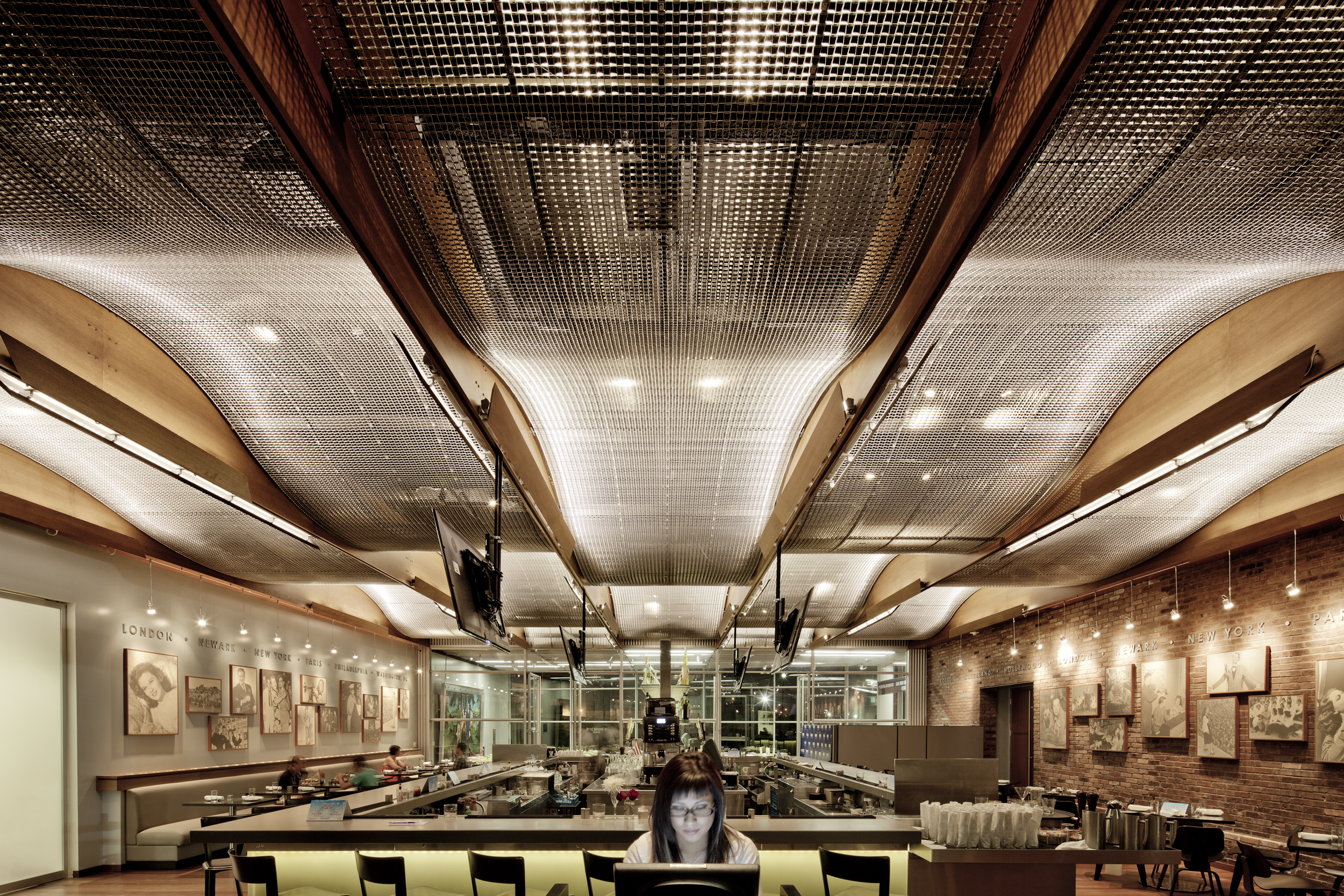
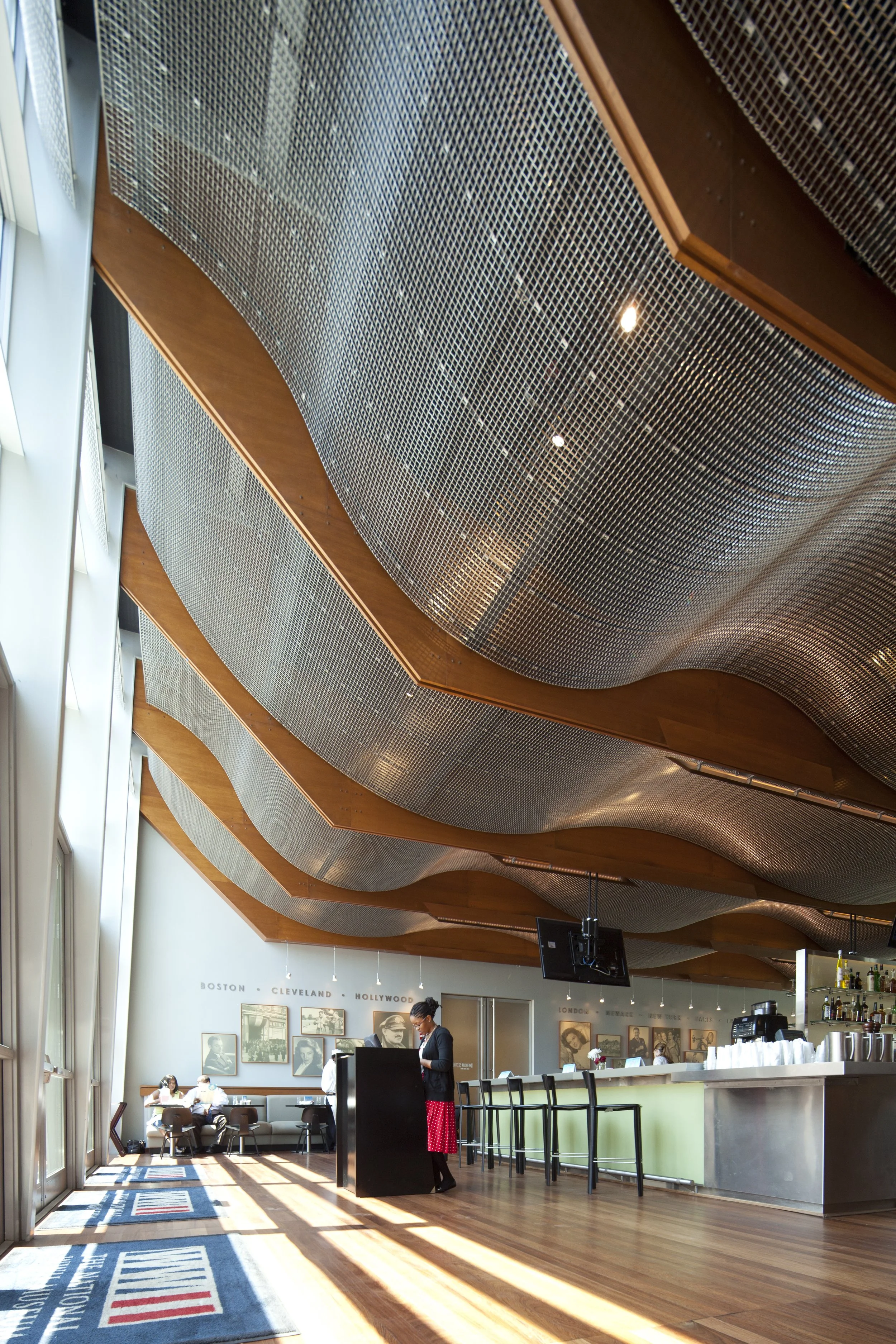
Located within the Solomon Victory Theater complex, The American Sector Restaurant & Bar serves as a social anchor and architectural complement to the Museum’s campus. The design translates the mechanical vocabulary of wartime production into a refined contemporary setting.
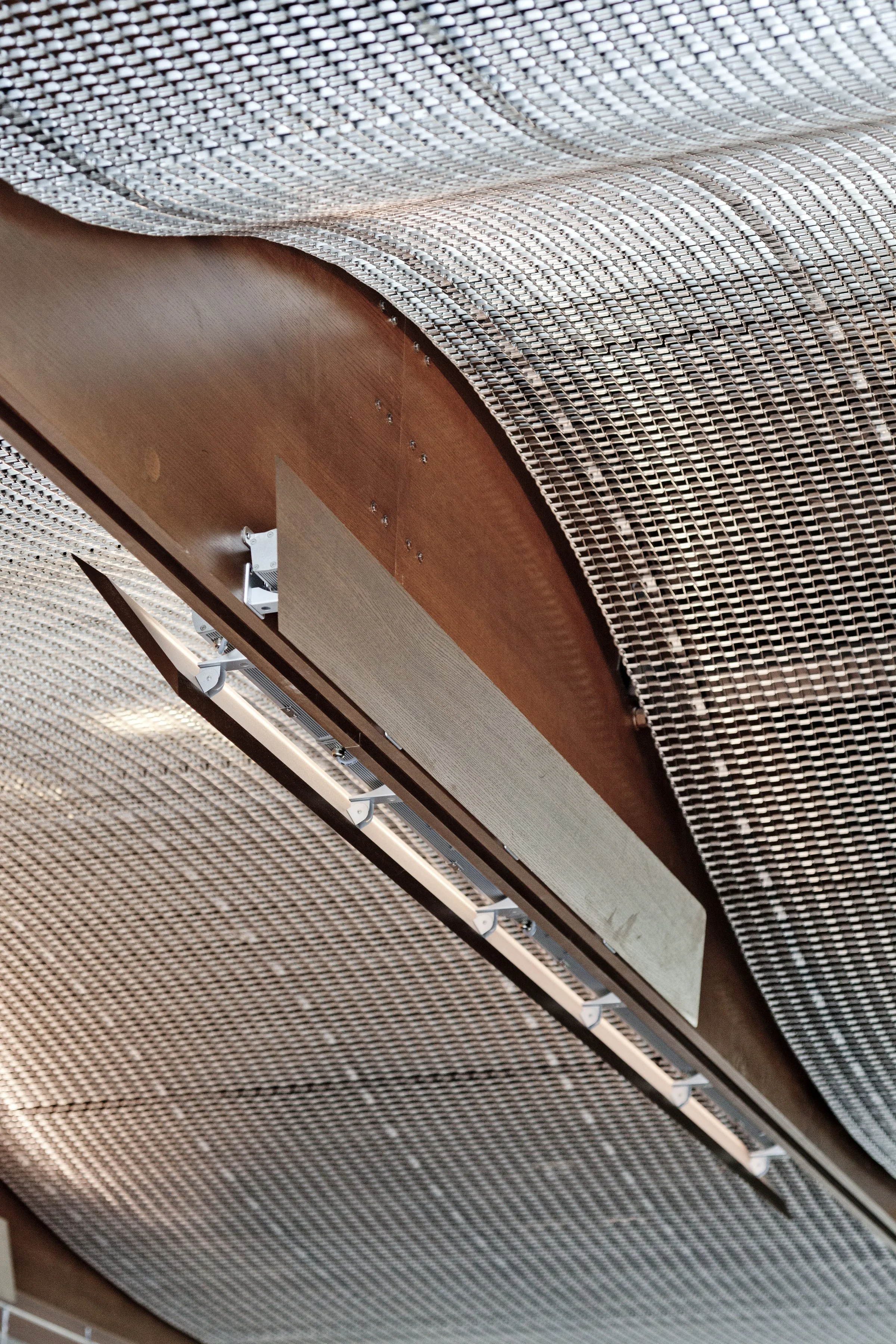
At its heart is a sweeping curved metal-mesh ceiling, suspended like a continuous ribbon of motion. Its undulating form recalls the rhythmic belt wheels of military tanks—a literal and symbolic reference to the machinery that powered the war effort and the innovations that followed. By day, sunlight filters through the perforated mesh, casting animated patterns across the space; by night, integrated LEDs trace its contours, echoing the Museum’s Canopy of Peace above.
Materials—steel, bronze, glass, and reclaimed wood—blend precision with warmth, evoking both the industry and intimacy of the wartime home front. The result is an architectural narrative of movement and memory, where light, form, and material embody the rhythm of resilience and renewal.
Exhibitions in Integration with Architecture
The success of The National WWII Museum lies in the seamless dialogue between architecture and exhibition design. The spatial framework conceived by the architectural team provided the foundation for Gallagher & Associates’ immersive storytelling.
Circulation and exhibit sequencing were choreographed in parallel, allowing the visitor’s movement through the pavilions to mirror the progression of the war itself—from uncertainty to conflict, devastation to victory, loss to renewal.
Light and shadow, transparency and solidity, compression and release—each architectural element reinforces the emotional rhythm crafted by the exhibitions. Together, these disciplines form a singular museum experience, where architecture gives shape to memory and exhibition transforms space into story.
The result is one of the most ambitious and emotionally resonant museum campuses in the world—an enduring collaboration between architect and storyteller, form and history, structure and remembrance.